Embark on a journey through the realm of Magento E-Commerce Development, where best practices reign supreme. This guide is your gateway to optimizing your online store for success, covering everything from development to security and performance.
As we delve into the intricacies of Magento E-Commerce Development, you'll discover the key strategies and techniques to elevate your online business to new heights.
Introduction to Magento E-Commerce Development
Magento E-Commerce Development refers to the process of creating and maintaining online stores using the Magento platform. Magento is a popular open-source e-commerce platform that provides businesses with a flexible and customizable solution to sell products and services online.
It is crucial to follow best practices in Magento E-Commerce Development to ensure that the online store functions efficiently, provides a seamless shopping experience for customers, and is optimized for performance and security.
Importance of Following Best Practices
Adhering to best practices in Magento E-Commerce Development is essential for several reasons:
- Enhanced Performance: Following best practices helps optimize the performance of the online store, ensuring fast loading times and smooth user experience.
- Improved Security: Implementing best practices strengthens the security of the e-commerce website, protecting customer data and preventing cyber threats.
- Scalability: By following best practices, developers can build a scalable and flexible e-commerce platform that can grow with the business's needs.
- Benefits: Following best practices in development can improve the search engine visibility of the online store, attracting more organic traffic.
Setting Up a Development Environment
Setting up a development environment for Magento is crucial for efficient e-commerce development. Whether you choose a local setup or opt for a cloud-based solution, the key is to have a reliable environment that allows for seamless coding, testing, and deployment.
Local Development Environment
Setting up a local development environment involves installing all necessary software directly on your computer. Here are the basic steps to get started:
- Choose a suitable local server software like XAMPP, WAMP, or MAMP based on your operating system.
- Download and install PHP, MySQL, and Apache server on your local machine.
- Install a code editor like Visual Studio Code, Sublime Text, or PHPStorm for writing and editing Magento code.
- Download the Magento software and set up a local instance for development purposes.
Cloud-Based Development Environment
Cloud-based development environments offer the advantage of scalability and accessibility. Here are some common options to consider:
- Magento Cloud: A platform specifically designed for Magento development with built-in tools for deployment and testing.
- Amazon Web Services (AWS) or Google Cloud Platform (GCP): Cloud services that provide infrastructure for hosting Magento instances.
- Docker: A containerization platform that allows for easy deployment and management of Magento environments.
Tools and Technologies
Magento development relies on a set of tools and technologies to streamline the process. Some commonly used tools include:
- Composer: A dependency manager for PHP that helps in managing Magento extensions and libraries.
- Git: A version control system for tracking changes in the codebase and collaborating with other developers.
- Magento CLI: Command-line interface tool for performing various tasks like installing extensions, clearing cache, and reindexing data.
- PHPUnit: A testing framework for writing unit tests to ensure the stability and functionality of Magento code.
Theme Development in Magento
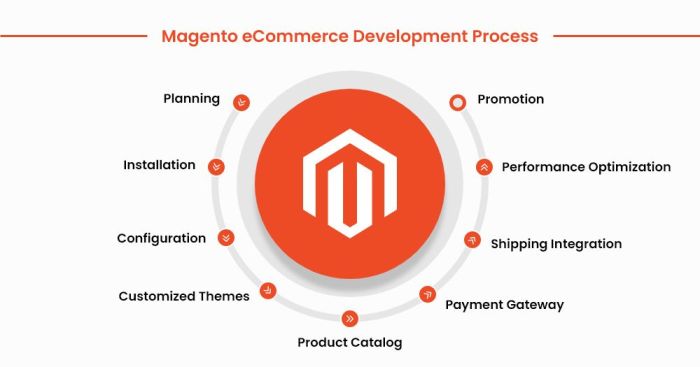
When it comes to Magento e-commerce development, theme development plays a crucial role in creating a visually appealing and user-friendly online store. In this section, we will discuss the importance of responsive design in Magento themes, best practices for customizing Magento themes, and the use of CSS preprocessors like LESS and SASS in theme development.
Importance of Responsive Design in Magento Themes
Responsive design is essential for Magento themes as it ensures that your online store looks and functions seamlessly across various devices, including desktops, laptops, tablets, and smartphones. With the increasing use of mobile devices for online shopping, having a responsive Magento theme is crucial to provide a positive user experience and improve conversion rates.
Best Practices for Customizing Magento Themes
- Follow Magento coding standards and best practices to ensure compatibility and future-proofing of your custom theme.
- Avoid directly modifying core files and instead utilize Magento's fallback system and theme inheritance to make changes.
- Use a child theme to customize the appearance and functionality of your Magento store without affecting the parent theme.
- Regularly update your custom theme to incorporate security patches, bug fixes, and new features released by Magento.
Use of CSS Preprocessors like LESS and SASS in Theme Development
CSS preprocessors like LESS and SASS offer advanced features and functionalities that can streamline the development process and enhance the maintainability of Magento themes. These preprocessors allow developers to write cleaner and more organized CSS code, use variables for easy styling consistency, and leverage mixins for code reusability.
Extension Development and Integration
Developing custom extensions in Magento involves creating additional functionalities or features that are not available in the core platform. This process allows developers to tailor the e-commerce store to meet specific business requirements. Here are the steps typically involved in developing custom extensions:
Developing Custom Extensions in Magento:
To develop a custom extension in Magento, developers need to follow these steps:
- Create a new module directory within the app/code directory of Magento.
- Define the module's configuration file to register the extension with Magento.
- Write the necessary PHP classes and functions to implement the desired functionality.
- Create layout XML files to define how the extension interacts with Magento's frontend.
- Implement any necessary database changes using setup scripts.
- Test the extension thoroughly to ensure it works as expected.
- Package the extension for distribution and installation on other Magento instances.
Integrating Third-Party Extensions into Magento:
When integrating third-party extensions into Magento, it's essential to follow best practices to ensure compatibility and scalability:
- Research the extension and read reviews to ensure it is reliable and well-maintained.
- Check the extension's compatibility with your Magento version to avoid issues.
- Backup your store before installing any new extension to prevent data loss in case of conflicts.
- Install the extension following the developer's instructions carefully.
- Test the extension thoroughly to ensure it works correctly with your store's setup.
- Monitor the extension's performance and compatibility with future Magento updates.
Tip: Regularly update your extensions to the latest versions to benefit from new features and security patches.
Performance Optimization
Optimizing the performance of a Magento store is crucial for providing a seamless user experience and improving conversion rates. By implementing various techniques, such as caching and indexing, you can enhance the speed and efficiency of your Magento website.
Importance of Caching and Indexing
Caching and indexing play a significant role in optimizing the performance of a Magento store. Caching helps store frequently accessed data and pages in a temporary storage area, reducing the load times for users. Indexing, on the other hand, organizes and optimizes the database queries, making data retrieval faster and more efficient.
- Enable full-page caching: Utilize Magento's built-in caching mechanisms to store full pages and serve them to users quickly without generating them from scratch each time.
- Optimize image sizes: Compress and resize images to reduce page load times and improve overall performance.
- Use a content delivery network (CDN): Distribute content across multiple servers located in different geographic locations to reduce latency and speed up content delivery.
Monitoring and Improving Website Speed
Monitoring the speed of your Magento website is essential for identifying performance bottlenecks and areas that need improvement. By using tools like Google PageSpeed Insights and GTmetrix, you can analyze your website's performance metrics and take necessary actions to optimize speed.
Regularly monitor server response times, page load times, and overall website performance to identify and address any issues promptly.
- Minimize HTTP requests: Reduce the number of requests needed to load a page by combining CSS and JavaScript files, and optimizing code.
- Implement lazy loading: Load images and content only when they are visible on the user's screen, improving initial page load times.
- Avoid unnecessary redirects: Minimize the use of redirects as they can slow down the loading process and impact user experience.
Security Best Practices
When it comes to running an e-commerce website on Magento, ensuring the security of your platform is crucial. Implementing security best practices can help protect your website, customer data, and overall business reputation. Let's dive into some key measures to enhance the security of your Magento website.
Regular Security Audits and Updates
Regular security audits and updates are essential to keep your Magento website secure. By conducting routine security audits, you can identify and address any vulnerabilities or weaknesses in your system before they are exploited by malicious actors. Additionally, staying up-to-date with the latest security patches and updates provided by Magento can help protect your website from emerging threats.
Testing and Quality Assurance

Testing and quality assurance play a crucial role in Magento development to ensure a seamless and bug-free E-Commerce platform. By implementing rigorous testing methodologies and quality assurance processes, developers can identify and rectify issues before they impact the user experience.
Importance of Testing in Magento Development
- Testing helps in identifying and fixing bugs early in the development process, reducing the likelihood of issues in the live environment.
- It ensures that all functionalities work as intended and provides a smooth user experience for customers visiting the website.
- Regular testing helps in maintaining the overall performance and reliability of the Magento website.
Different Testing Methodologies for Magento Websites
- Unit Testing: Focuses on testing individual components or modules of the Magento website to ensure they function correctly.
- Integration Testing: Checks how different components interact with each other and ensures they work seamlessly together.
- Performance Testing: Evaluates the speed, responsiveness, and stability of the website under varying load conditions to optimize performance.
Significance of Quality Assurance Processes
- Quality assurance processes involve systematic monitoring and evaluation of the development process to maintain high standards of quality.
- They help in identifying potential issues early on and ensure that the final product meets the required specifications and standards.
- Quality assurance processes contribute to building a reliable and secure E-Commerce platform, enhancing customer trust and satisfaction.
Payment Gateway Integration
Integrating payment gateways in Magento is crucial for any e-commerce store to accept online payments securely and efficiently. By seamlessly integrating payment gateways, you can provide a smooth checkout experience for your customers, ultimately leading to increased sales and customer satisfaction.
Comparison of Payment Gateway Options
- Magento default payment gateways: Magento comes with built-in payment gateway options such as PayPal, Authorize.Net, and Braintree, offering a variety of choices for store owners.
- Third-party payment gateways: There are also third-party payment gateway options available for Magento, including Stripe, Square, and Amazon Pay, each with its own set of features and pricing.
- Custom payment gateway integration: For unique requirements, custom payment gateway integration can be implemented to cater to specific needs of the business.
Best Practices for Secure Payment Gateway Integration
- Use secure connections: Ensure that all payment transactions are encrypted using SSL to protect sensitive data.
- Implement PCI compliance: Adhere to PCI DSS standards to securely handle credit card information and prevent data breaches.
- Stay updated: Regularly update payment gateway extensions to the latest versions to patch any security vulnerabilities.
- Test thoroughly: Conduct rigorous testing to ensure that payment gateway integration works smoothly without any errors or issues.
Final Thoughts
In conclusion, mastering the best practices in Magento E-Commerce Development is crucial for creating a robust and efficient online store. By following the guidelines Artikeld in this guide, you can ensure seamless functionality, enhanced security, and optimal performance for your Magento website.
FAQ Corner
What are the common security threats in Magento E-Commerce Development?
Common security threats include SQL injection, cross-site scripting (XSS), and data breaches. It is essential to implement security measures to safeguard your Magento website against these threats.
How can I optimize the performance of my Magento store?
Optimize performance by enabling caching, minifying CSS and JavaScript files, optimizing images, and using a content delivery network (CDN). Regular monitoring and maintenance are also vital for ensuring optimal performance.
What is the significance of quality assurance processes in Magento development?
Quality assurance processes help identify and eliminate bugs and errors in the E-Commerce platform, ensuring a seamless user experience. By conducting thorough testing and quality assurance, you can maintain the reliability and functionality of your Magento website.