
Diving into the realm of Best Ecommerce Marketing Trends to Watch in 2025, this introduction sets the stage for an insightful exploration of the latest strategies and innovations shaping the ecommerce landscape.
The following paragraphs will delve into key trends and emerging technologies that are poised to redefine the way businesses engage with consumers in the digital age.
Emerging Technologies
AI, AR/VR, voice commerce, blockchain, and IoT are transforming the landscape of ecommerce marketing strategies. These technologies are reshaping how businesses interact with customers, improve user experience, and enhance security measures in online shopping.
Impact of AI, AR/VR, and Voice Commerce
AI-powered chatbots and personalized product recommendations are revolutionizing customer interactions and driving sales. AR/VR technologies are enabling virtual try-on experiences, enhancing product visualization, and increasing customer engagement. Voice commerce through virtual assistants like Alexa and Siri is streamlining the shopping process and providing convenience to consumers.
Role of Blockchain Technology
Blockchain technology is set to revolutionize payment processing by offering secure, transparent, and efficient transactions. Smart contracts powered by blockchain ensure trust and eliminate intermediaries in online transactions, enhancing security and reducing costs for both businesses and consumers.
IoT for Personalized Shopping Experiences
The Internet of Things (IoT) is enabling personalized shopping experiences by collecting and analyzing data from connected devices. Retailers can track customer preferences, behavior, and buying patterns to offer targeted promotions, personalized recommendations, and seamless shopping experiences across multiple channels.
Content Marketing Trends
Content marketing in the ecommerce industry is constantly evolving, with new trends emerging to capture the attention of consumers and drive sales. One significant shift in recent years has been towards interactive content, such as shoppable posts and 360-degree product views.
These innovative formats allow customers to engage with products in a more immersive way, leading to increased interest and ultimately higher conversion rates.
Interactive Content
- Shoppable posts on social media platforms like Instagram and Facebook allow users to purchase products directly from the post, streamlining the buying process and reducing friction.
- 360-degree product views give customers a more comprehensive look at a product, simulating an in-store experience and helping to build trust and confidence in their purchase decision.
Video Marketing vs. Text-Based Content
Video marketing has become increasingly popular in ecommerce due to its ability to convey information quickly and engagingly. Compared to traditional text-based content, videos have shown to be more effective in driving sales and increasing brand awareness. According to recent studies, consumers are more likely to make a purchase after watching a video about a product compared to reading a product description.
User-Generated Content Strategies
- Leveraging user-generated content, such as customer reviews, photos, and videos, can greatly enhance brand engagement and credibility. Encouraging customers to share their experiences with your products can create a sense of community and authenticity around your brand.
- Featuring user-generated content on your website and social media channels can also help build trust with potential customers, as they see real people using and enjoying your products.
Personalization and Customer Experience
Personalization is crucial in today's ecommerce landscape as it allows businesses to tailor product recommendations to individual shoppers, providing them with a more personalized and relevant shopping experience. By utilizing data analytics and AI algorithms, companies can analyze customer behavior, preferences, and purchase history to offer targeted product suggestions, ultimately increasing customer satisfaction and driving sales.
Importance of Hyper-Personalization
Hyper-personalization goes beyond traditional personalization methods by leveraging advanced technologies to create highly tailored shopping experiences for customers. By utilizing real-time data and predictive analytics, businesses can deliver personalized product recommendations, offers, and promotions based on individual preferences, browsing history, and demographics.
This level of customization not only enhances the overall customer experience but also fosters customer loyalty and repeat purchases.
Omnichannel Marketing Campaigns
Successful omnichannel marketing campaigns seamlessly integrate multiple channels, such as online platforms, social media, mobile apps, and physical stores, to provide customers with a consistent and cohesive shopping experience across all touchpoints
Examples of successful omnichannel campaigns include Starbucks' mobile app, which allows customers to order and pay for drinks seamlessly across various channels, and Nike's "store to door" initiative, which enables customers to purchase products online and pick them up in-store.
Role of AI-Powered Chatbots
AI-powered chatbots play a crucial role in improving customer service and driving conversions by providing instant support, personalized recommendations, and seamless interactions with customers. These intelligent bots can assist customers with product inquiries, offer personalized product suggestions, and guide them through the purchasing process, ultimately enhancing the overall customer experience.
By leveraging machine learning and natural language processing capabilities, chatbots can analyze customer queries, provide accurate responses, and streamline the shopping journey, leading to increased customer satisfaction and higher conversion rates.
Sustainability and Ethical Practices
In today's increasingly conscious consumer market, sustainability and ethical practices have become key differentiators for brands looking to attract and retain customers. This shift in consumer behavior has pushed ecommerce businesses to reevaluate their strategies and incorporate eco-friendly initiatives into their operations.One way brands can showcase their commitment to sustainability is through the use of eco-friendly packaging.
By opting for biodegradable materials, reducing excess packaging, and promoting recycling practices, companies can not only reduce their environmental impact but also appeal to environmentally conscious consumers. This approach not only aligns with the values of the brand but also helps in building a positive brand image.
Eco-friendly Packaging and Sustainable Sourcing
- Utilizing biodegradable and recyclable materials for packaging.
- Reducing excess packaging and promoting recycling practices.
- Communicating the eco-friendly initiatives to customers through marketing channels.
- Collaborating with sustainable sourcing partners to ensure ethical practices throughout the supply chain.
Resale and Rental Marketplaces
- Embracing the growing trend of resale and rental marketplaces in the ecommerce industry.
- Offering pre-owned or rental options to reduce waste and promote a circular economy.
- Partnering with resale platforms to reach a wider audience of eco-conscious consumers.
- Highlighting the benefits of buying used or renting products as a sustainable choice.
Closing Notes
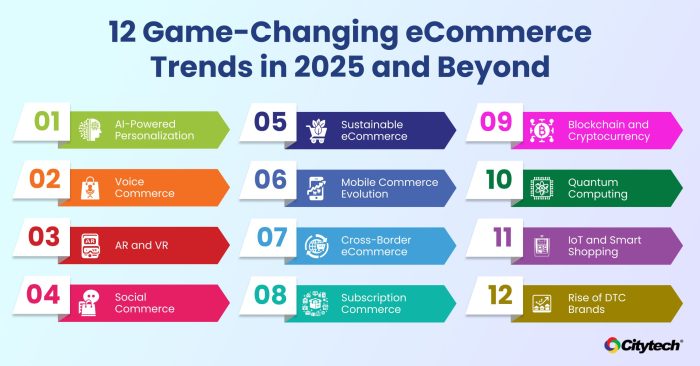
In conclusion, the future of ecommerce marketing in 2025 promises a dynamic and customer-centric landscape driven by innovation and personalization. As businesses adapt to evolving consumer preferences, staying abreast of these trends will be crucial for success in the competitive online marketplace.
Essential FAQs
How can blockchain technology impact payment processing in ecommerce?
Blockchain technology can streamline transactions, enhance security, and provide transparency in payment processing, offering a more efficient and secure payment ecosystem for online shoppers.
What is the significance of hyper-personalization in ecommerce marketing?
Hyper-personalization allows businesses to tailor product recommendations based on individual preferences, increasing customer engagement and fostering brand loyalty.
Why are sustainability and ethical practices important in the ecommerce industry?
Embracing sustainability and ethical practices can help brands attract conscious consumers, differentiate themselves in the market, and contribute to a more environmentally friendly business model.