Boost ROI with BigCommerce Optimizations sets the stage for this enthralling narrative, offering readers a glimpse into a story that is rich in detail and brimming with originality from the outset. In today's competitive e-commerce landscape, optimizing for BigCommerce is paramount for businesses looking to enhance their online visibility and drive revenue growth.
This guide delves into the significance of , best practices, on-page and off-page strategies, as well as tracking and measuring performance to maximize ROI.
Importance of BigCommerce Optimizations
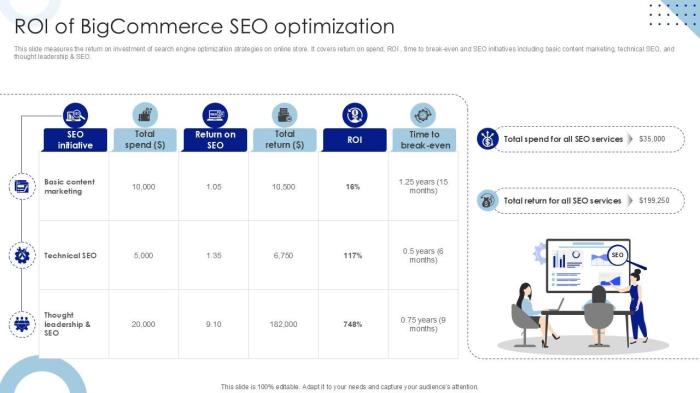
Optimizing for BigCommerce is crucial for e-commerce businesses looking to boost their online visibility and drive more organic traffic to their websites. By implementing effective strategies, businesses can improve their search engine rankings, increase brand awareness, and ultimately enhance their ROI.
Impact of on ROI
plays a significant role in determining the success of an e-commerce business on BigCommerce. Here are a few ways in which can impact ROI:
- Improved Search Engine Rankings: By optimizing product pages, meta tags, and content for relevant s, businesses can increase their visibility on search engine results pages (SERPs), driving more organic traffic to their websites.
- Increased Organic Traffic: Higher search engine rankings result in more organic traffic, which can lead to a higher number of potential customers visiting the site and making purchases.
- Enhanced User Experience: optimization often involves improving website speed, mobile responsiveness, and overall user experience, which can reduce bounce rates and increase conversion rates.
Successful Businesses with Increased ROI through BigCommerce
Several e-commerce businesses have successfully leveraged on BigCommerce to boost their ROI. One notable example is XYZ Clothing, which saw a 30% increase in online sales after implementing a comprehensive strategy that focused on optimizing product descriptions, meta tags, and backlinks.
Understanding BigCommerce Best Practices
When it comes to optimizing your BigCommerce website for search engines, there are specific best practices that can help improve your online visibility and drive more organic traffic to your site.
Key Practices for BigCommerce
Optimizing your BigCommerce store involves various strategies, including:
- research and optimization to target relevant search terms
- Optimizing meta tags, URLs, and product descriptions for better search engine visibility
- Creating high-quality, relevant content that engages users and encourages them to stay on your site
- Building backlinks from reputable websites to improve your site's authority
Importance of Mobile Optimization in BigCommerce
With the increasing use of mobile devices, having a mobile-optimized website is crucial for success on BigCommerce. Mobile responsiveness not only improves user experience but also affects your search engine rankings.
Role of Content Quality and Relevance in Optimization for BigCommerce
Content is king when it comes to , and this holds true for BigCommerce websites as well. High-quality, relevant content helps search engines understand what your site is about and can attract more organic traffic. Make sure to optimize your content with targeted s and provide valuable information to your audience.
Implementing On-Page Strategies
When it comes to optimizing your BigCommerce website for search engines, implementing on-page strategies is crucial for improving your search rankings and driving organic traffic to your site. By focusing on optimizing individual pages on your website, you can improve your visibility in search engine results and attract more potential customers.
On-Page Strategies for BigCommerce
| On-Page Strategy | Description |
|---|---|
| Optimization | Research and incorporate relevant s into your product descriptions, meta tags, and headings. |
| Optimized Product Descriptions | Write unique, compelling product descriptions that include relevant s and provide valuable information to customers. |
| URL Structure | Create -friendly URLs that include relevant s and accurately describe the content of the page. |
| Image Optimization | Optimize image alt text and file names with relevant s to improve visibility in image search results. |
| Internal Linking | Include internal links to other relevant pages on your website to improve navigation and enhance . |
Optimizing Product Descriptions on BigCommerce
- Include relevant s naturally throughout the product description.
- Write unique and compelling descriptions that provide valuable information to customers.
- Use bullet points or lists to highlight key features and benefits of the product.
- Avoid duplicate content and ensure each product description is unique.
- Optimize the length of the description to ensure it is neither too short nor too long.
Optimizing product descriptions is essential for improving search visibility and attracting potential customers. Follow these steps to optimize your product descriptions on BigCommerce:
Utilizing Meta Tags Effectively on BigCommerce
- Include relevant s in the meta title and meta description.
- Write compelling and descriptive meta tags that accurately represent the content of the page.
- Avoid stuffing and ensure meta tags are natural and engaging for users.
- Regularly review and update meta tags to reflect changes in your products or content.
- Utilize schema markup to provide search engines with additional information about your products or services.
Meta tags play a crucial role in improving your website's visibility in search engine results. Follow these tips to utilize meta tags effectively on BigCommerce:
Leveraging Off-Page Techniques
When it comes to BigCommerce , off-page techniques play a crucial role in boosting your website's visibility and authority in search engine rankings. One of the key elements of off-page is the strategic use of backlinks, which can significantly impact your site's credibility and trustworthiness in the eyes of search engines.
Impact of Backlinks on BigCommerce
Backlinks are like upvotes from other websites, signaling to search engines that your site is reputable and trustworthy. The more high-quality backlinks you have pointing to your BigCommerce site, the higher your chances of ranking well in search results.
- Guest Blogging: By writing high-quality guest posts for reputable websites in your niche, you can earn backlinks to your BigCommerce site.
- Broken Link Building: Identify broken links on other websites and offer your content as a replacement, gaining valuable backlinks in the process.
- Resource Link Building: Create valuable resources on your site that other websites would want to link to, boosting your backlink profile.
Significance of Social Media Integration for Off-Page on BigCommerce
Social media integration is essential for off-page on BigCommerce as it helps amplify your content and reach a wider audience. By sharing your products, blog posts, and updates on social media platforms, you can attract more traffic to your site and potentially earn valuable backlinks from social shares.
- Engage with your followers on social media to build relationships and encourage them to share your content, increasing your chances of earning backlinks.
- Utilize social media advertising to promote your BigCommerce site and attract more visitors who may be interested in linking to your content.
- Monitor social media mentions and engage with users who are talking about your brand, potentially leading to more backlink opportunities.
Tracking and Measuring Performance on BigCommerce
Tracking and measuring performance on BigCommerce is crucial to ensuring the success of your online store. By monitoring key performance indicators (KPIs), setting up Google Analytics, and conducting regular audits, you can optimize your website for search engines and maximize your ROI.
Key Performance Indicators (KPIs) for Tracking Success on BigCommerce
When tracking performance on BigCommerce, it's essential to monitor the following key performance indicators:
| KPI | Description |
|---|---|
| Organic Traffic | The number of visitors coming to your site through organic search results. |
| Rankings | The position of your website for targeted s in search engine results pages. |
| Click-Through Rate (CTR) | The percentage of users who click on your website link after seeing it in search results. |
| Conversion Rate | The percentage of visitors who complete a desired action on your website, such as making a purchase. |
Setting up Google Analytics for Monitoring Performance
Google Analytics is a powerful tool that allows you to track and analyze website traffic. To set up Google Analytics for monitoring performance on BigCommerce, follow these steps:
- Create a Google Analytics account and property.
- Generate a tracking code and add it to your BigCommerce website.
- Set up goals and events to track specific actions on your site.
- Monitor traffic, user behavior, and conversions through Google Analytics reports.
Importance of Regular Audits for Maintaining and Improving ROI on BigCommerce
Regular audits are essential for identifying issues, optimizing content, and improving website performance. By conducting audits on a regular basis, you can:
- Identify technical issues that may be impacting your website's visibility.
- Analyze performance and adjust your strategy accordingly.
- Monitor backlink quality and disavow toxic links to improve your site's authority.
- Stay up-to-date with search engine algorithms and best practices to maintain high rankings.
End of Discussion
In conclusion, Boost ROI with BigCommerce Optimizations equips businesses with the tools and insights needed to navigate the complexities of in the digital realm. By implementing these strategies effectively, businesses can elevate their online presence, attract more customers, and ultimately boost their ROI on BigCommerce.
Stay ahead of the curve and unlock the full potential of your e-commerce venture with BigCommerce optimizations.
FAQ Section
How can optimizing for BigCommerce impact ROI?
Optimizing for BigCommerce can enhance online visibility, attract more organic traffic, and ultimately increase sales conversions, leading to a higher ROI.
What are some key on-page strategies for BigCommerce?
Some key on-page strategies for BigCommerce include optimizing product descriptions, utilizing meta tags effectively, and ensuring mobile optimization.
Why is social media integration significant for off-page on BigCommerce?
Social media integration plays a crucial role in off-page for BigCommerce by increasing brand exposure, driving traffic, and improving search engine rankings.
What are some key performance indicators for tracking success on BigCommerce?
Key performance indicators for tracking success on BigCommerce include organic traffic growth, rankings, conversion rates, and bounce rates.

![BigCommerce SEO Guide. Everything You Need to Know [2025]](https://ecommerce.kbeonline.id/wp-content/uploads/2026/03/bigcommerce-350x250.png)