Magento vs. Shopify: Which Platform Has Better ? sets the stage for this enthralling narrative, offering readers a glimpse into a story that is rich in detail and brimming with originality from the outset.
plays a crucial role in the success of e-commerce platforms, driving online traffic and ultimately impacting sales. Magento and Shopify, two prominent platforms in the e-commerce realm, each have their strengths when it comes to strategies. Let's delve into the comparison to determine which platform emerges as the winner in this digital battleground.
Introduction
In the world of e-commerce, Search Engine Optimization () plays a crucial role in determining the success of an online store. It involves optimizing your website to rank higher in search engine results, thereby increasing visibility and driving more organic traffic to your site.
This, in turn, can lead to higher conversions and sales.Magento and Shopify are two popular e-commerce platforms used by businesses to set up their online stores. While both platforms offer a range of features and functionalities, one key aspect that businesses consider when choosing between Magento and Shopify is their capabilities. is essential for e-commerce platforms as it helps improve the visibility of products and services offered by online stores.
By optimizing product pages, meta tags, URLs, and other on-page elements, e-commerce websites can attract more relevant traffic and potential customers. Additionally, a well-optimized website is more likely to rank higher in search engine results, increasing the chances of driving sales.
Magento vs. Shopify: Comparison
When it comes to , Magento and Shopify have their own strengths and weaknesses. Let's delve deeper into how these platforms stack up against each other in terms of capabilities.
Features of Magento
Magento, being a robust e-commerce platform, offers several built-in features to help optimize websites for search engines. These features are essential for improving visibility and driving organic traffic to online stores.
1. -friendly URLs
Magento allows users to create -friendly URLs that include relevant s, making it easier for search engines to crawl and index web pages.
2. Meta Tags Optimization
Users can customize meta titles, descriptions, and s for each product, category, and content page to enhance visibility in search engine results pages (SERPs).
3. XML Sitemap Generation
Magento automatically generates XML sitemaps, which help search engines discover and crawl all the pages on a website efficiently.
4. Canonical Tags
Magento supports canonical tags, which prevent duplicate content issues by specifying the preferred version of a webpage for search engines to index.
5. Image Optimization
Users can optimize images by adding alt text, titles, and descriptions, improving accessibility and search engine visibility.
6. Mobile Optimization
Magento offers responsive themes and mobile optimization features to ensure websites are mobile-friendly, which is crucial for performance.
7. Rich Snippets Support
Magento supports rich snippets, allowing users to enhance search listings with additional information like product prices, ratings, and availability.Overall, Magento provides a comprehensive set of features that can be customized and utilized to improve search engine rankings and drive organic traffic to e-commerce websites.
Features of Shopify
When it comes to features, Shopify offers a range of built-in tools and functionalities to help optimize your online store for search engines. Let's delve into some of the key features that Shopify provides to enhance your website's visibility and ranking.
Shopify’s Built-In Features
- -friendly URLs: Shopify automatically generates clean and search engine-friendly URLs for your product pages, collections, and blog posts.
- Meta Tags: You can easily customize meta titles, meta descriptions, and meta s for each page to improve search engine visibility.
- Image Optimization: Shopify allows you to add alt text to your product images, helping search engines understand the content of your images.
- Mobile Optimization: Shopify themes are optimized for mobile responsiveness, which is crucial for rankings as mobile-friendliness is a key factor considered by search engines.
Optimizing for Search Engines on Shopify
- Optimization: Utilize Shopify's features to strategically place s in your content, meta tags, and product descriptions to improve search engine rankings.
- Content Optimization: Create high-quality, relevant content that incorporates s naturally and provides value to your audience.
- Site Speed: Shopify's infrastructure ensures fast loading times, which is important for as search engines prioritize websites that offer a seamless user experience.
Customizable Options on Shopify
- Robots.txt: You can edit the robots.txt file to control search engine crawlers' access to different parts of your website.
- 301 Redirects: Shopify allows you to set up 301 redirects for old URLs to new ones, preserving value and ensuring a smooth user experience.
- Canonical Tags: Easily add canonical tags to prevent duplicate content issues and consolidate authority to the preferred version of a page.
Technical Comparison
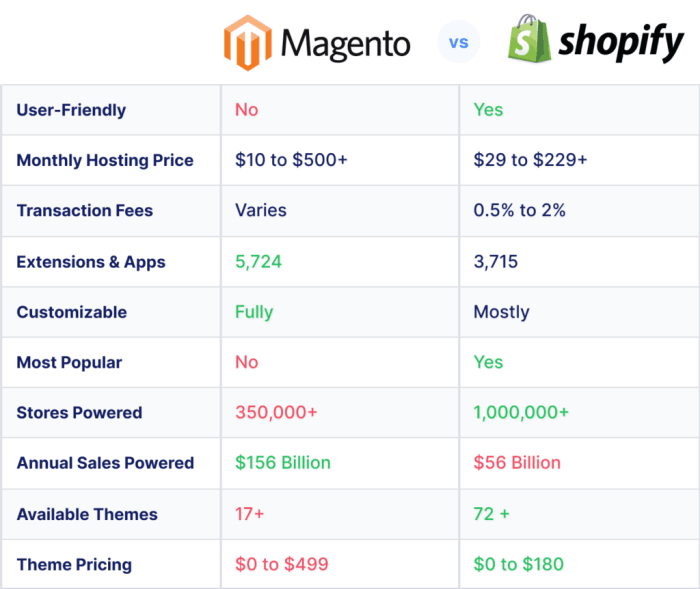
When it comes to technical capabilities, Magento and Shopify offer different features and functionalities that can impact the overall search engine optimization of an online store. Let's delve into the specific technical aspects and compare how each platform handles URL structures, meta tags, and other technical elements.
URL Structures
- Magento: Magento allows for customizable URL structures, giving users the flexibility to optimize URLs for by including relevant s and categories. This can help improve the visibility of products and categories in search engine results.
- Shopify: Shopify also offers customizable URL structures but may have limitations compared to Magento. Users can still optimize URLs for but might have slightly less control over the structure compared to Magento.
Meta Tags
- Magento: With Magento, users have the ability to set unique meta tags for each product and category, including meta titles and descriptions. This level of customization can help improve click-through rates and overall performance.
- Shopify: Shopify also allows for setting custom meta tags, but users might find Magento to offer more advanced options for meta tag optimization. However, Shopify's user-friendly interface makes it easier for beginners to manage meta tags effectively.
Other Technical Aspects
- Magento: Magento provides a robust platform for technical optimization, including features like canonical tags, structured data markup, and XML sitemaps. These tools can help improve site indexing and overall search engine visibility.
- Shopify: While Shopify may not offer the same level of technical customization as Magento, it still includes essential features like canonical tags and sitemap generation. Shopify's simplicity and ease of use make it a solid choice for beginners looking to optimize their online store.
Content Marketing and
Content marketing plays a crucial role in boosting performance for e-commerce platforms like Magento and Shopify. By strategically creating and optimizing content, businesses can improve their search engine rankings and attract more organic traffic to their websites.
Content Marketing on Magento
- Utilize research: Conduct thorough research to identify relevant terms and phrases that your target audience is searching for. Integrate these s naturally into your product descriptions, blog posts, and other content.
- Create engaging product descriptions: Write unique and compelling product descriptions that not only describe the features but also highlight the benefits. This can help improve your website's visibility in search results.
- Optimize meta tags: Ensure that your meta titles and descriptions are optimized with relevant s to improve click-through rates from search engine results pages.
- Regularly update content: Keep your website fresh with new blog posts, product updates, and other content to signal to search engines that your site is active and relevant.
Content Marketing on Shopify
- Optimize product images: Use high-quality images and optimize them with descriptive filenames and alt text. This can improve visibility in image search results and enhance overall .
- Create informative blog posts: Write blog posts that address common customer questions, industry trends, or product use cases. This can help establish your expertise and attract organic traffic.
- Utilize internal linking: Link related products, blog posts, and pages within your website to improve navigation for users and help search engines understand the structure of your site.
- Implement customer reviews: Encourage customers to leave reviews and testimonials on your product pages. User-generated content can enhance credibility and improve .
Mobile Optimization for
Mobile optimization is crucial for on e-commerce platforms due to the increasing number of users accessing websites through mobile devices. Search engines prioritize mobile-friendly websites in their rankings, making it essential for online businesses to ensure a seamless mobile experience for users.
Magento vs. Shopify Mobile Optimization Comparison
- Magento: Magento offers responsive design themes that automatically adjust the layout based on the user's device, ensuring a consistent experience across different screen sizes. Additionally, Magento allows for AMP (Accelerated Mobile Pages) integration to improve loading speed on mobile devices, enhancing performance.
- Shopify: Shopify also provides responsive themes and mobile optimization features to create a user-friendly experience on mobile devices. The platform offers mobile-friendly checkout options, streamlined navigation, and fast loading times to improve rankings.
Responsive Design and Mobile User Experience Considerations
- Responsive Design: Both Magento and Shopify prioritize responsive design to ensure that websites adapt to various screen sizes and devices. This approach not only enhances by providing a consistent user experience but also boosts conversion rates and reduces bounce rates.
- Mobile User Experience: When optimizing for mobile, factors such as page loading speed, intuitive navigation, mobile-friendly content, and clear calls-to-action play a crucial role in improving performance. Both Magento and Shopify offer tools and features to enhance mobile user experience and ultimately drive organic traffic to e-commerce websites.
Analytics and Reporting
When it comes to tracking and analyzing performance, both Magento and Shopify offer valuable tools for users to monitor their website's search engine optimization efforts. Let's take a closer look at the analytics and reporting features provided by these platforms.
Magento Analytics and Reporting
Magento provides users with a robust set of analytics and reporting tools to help them monitor the performance of their website in search engine results. Users can access detailed reports on key metrics such as organic traffic, rankings, backlinks, and more.
Additionally, Magento offers integration with popular analytics tools like Google Analytics to provide even more in-depth insights into website performance.
Shopify Performance Tracking
On the other hand, Shopify also offers users the ability to track their website's performance through built-in analytics and reporting features. Users can monitor key metrics such as organic traffic, performance, and conversion rates directly within the Shopify dashboard.
Additionally, Shopify integrates with Google Search Console to provide users with valuable data on how their website is performing in search engine results.
Comparison of Data Insights and Reporting Capabilities
When comparing the data insights and reporting capabilities of Magento and Shopify, both platforms offer comprehensive tools for monitoring performance. Magento excels in providing detailed reports on various metrics, while Shopify offers a user-friendly interface for tracking key performance indicators.
Ultimately, the choice between Magento and Shopify will depend on the specific needs and preferences of the user when it comes to analyzing and reporting on efforts.
Last Point
In conclusion, the battle between Magento and Shopify for supremacy unveils a complex landscape where technical capabilities, content strategies, and mobile optimization play pivotal roles. As businesses navigate the digital realm, understanding the nuances of on these platforms becomes essential for achieving online visibility and success.
Quick FAQs
Is Magento or Shopify better for ?
Both Magento and Shopify offer robust features, but the choice depends on the specific needs and goals of your e-commerce business. Magento provides more customization options, while Shopify is known for its user-friendly interface.
Do I need technical expertise to optimize on Magento and Shopify?
While technical understanding can be beneficial, both platforms offer user-friendly interfaces and guides to help optimize without extensive technical knowledge.
How can I track performance on Magento and Shopify?
Magento offers analytics tools within the platform, while Shopify provides performance tracking features. Both platforms allow users to monitor key metrics and make informed decisions based on data insights.

![BigCommerce SEO Guide. Everything You Need to Know [2025]](https://ecommerce.kbeonline.id/wp-content/uploads/2026/03/bigcommerce-350x250.png)